The Curveball Pick
President Donald Trump just threw Wall Street a curveball.
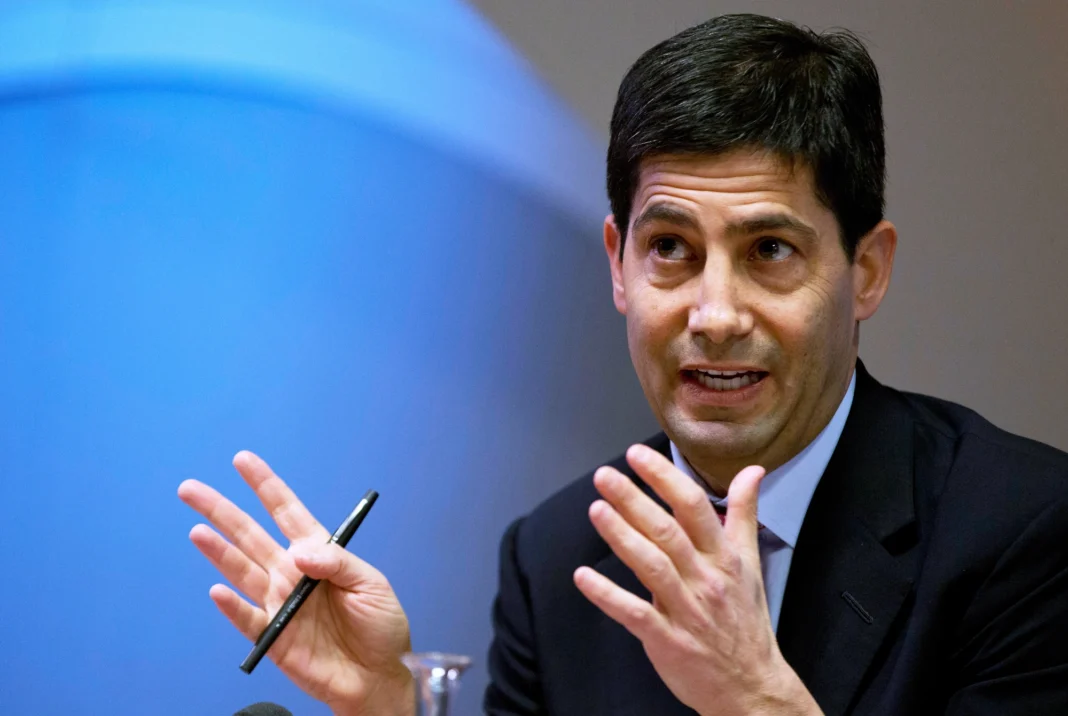
In selecting Kevin Warsh to lead the Federal Reserve, the President is betting on a candidate who defies the usual labels. Warsh is a former Fed governor and a Wall Street banker. He built his reputation as a hawk who fixated on the dangers of surging prices and “artificially cheap” money.
On paper, that sounds like a man who would hesitate to cut rates. That view runs directly counter to Trump’s demand for swift cuts to juice a fast-growing economy.
So why did he get the nod?
The AI Pivot
Warsh has managed to thread a very difficult needle over the last year. He agrees with Trump that borrowing costs should fall. But he arrives at that conclusion differently.
His argument hinges on the supply side. Warsh believes that the AI revolution and deregulation will drive massive productivity gains. If workers produce more, the economy can grow faster without triggering inflation. That “speed limit” increase gives the Fed room to cut rates without overheating the engine.
It is a theory that aligns perfectly with the “MAGA” economic vision.
“Fresh Air” for the Fed
Mohamed El-Erian, the famed economist and a longtime colleague of Warsh, thinks this is exactly the shake-up the institution needs.
El-Erian argues that current Chair Jerome Powell waited far too long to act on economic data. He believes the Fed lost its “strategic muscle” and became paralyzed by looking at the rearview mirror of lagging data points.
“What’s going to happen now is that he’s going to bring fresh air into the institution,” El-Erian said. “You have to have a forward-looking view.”
The Three Challenges
Taking the big chair won’t be easy. Warsh inherits a divided committee and an institution defensive about its political independence.
He also faces a skepticism hurdle. Critics point out that Warsh has historically hated the Fed’s “bloated” balance sheet. He views massive bond-buying programs as “mission creep” that distorts markets.
This sets up a potential clash. Trump wants looser financial conditions. Shrinking the balance sheet usually tightens them.
El-Erian isn’t worried. He notes that past quantitative easing (QE) pumped up asset prices for the rich but didn’t necessarily boost the real economy. A smarter, leaner balance sheet might actually help allocate resources better.
Independence vs. Loyalty
The biggest question remains political. Can Warsh say “no” to the man who appointed him?
El-Erian believes he has the backbone to stand his ground. He notes that Warsh understands the difference between “collaboration” with the Treasury and total submission.
“He is someone who understands that you need to strengthen and modernize this institution,” El-Erian said. “And importantly, it retains its political independence.”
For now, the markets are watching. Warsh has the resume, the “central casting” look, and the theory to back it up. Now he just needs the gavel.