
The View from the Pasture
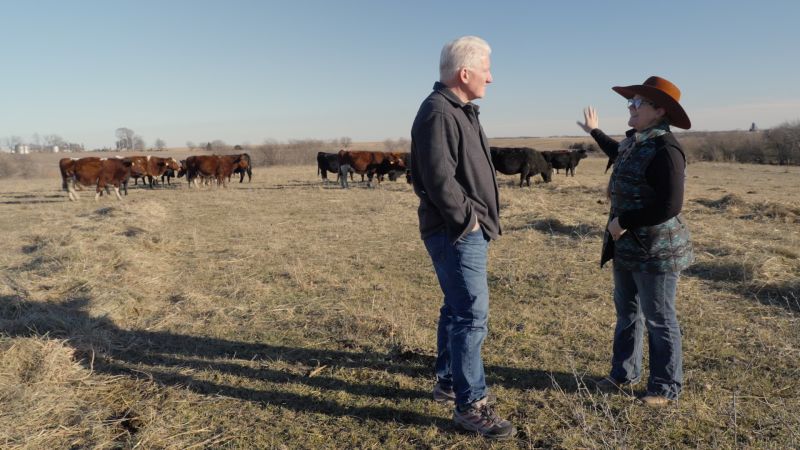
Shanen Ebersole is busy. Calving season is right around the corner at her farm in Kellerton, Iowa. Election season will just have to wait.
“We’ll walk them the mile and a half home in a month or so,” she says, watching her herd graze peacefully. “I wish Washington could get along like cows. They need to find a way to get along for us, because that’s what we the taxpayers pay them to do.”
Ebersole represents a critical slice of the electorate: the reluctant Trump voter. She originally backed Nikki Haley but came home to Trump for the sake of the family farm.
Now? She is feeling a little exhausted.
Grading the President
One year into Trump’s second term, Ebersole gives him a 3 out of 5.
The economy feels better. Illegal border crossings are down. Those are the wins. But the losses are stinging. She recoiled at the President’s plan to increase low-tariff beef imports from Argentina. To her, that doesn’t feel like “America First.”
And the recent talk about annexing Greenland?
“I don’t agree with that in any way, shape or form,” she says bluntly. “We need to take care of the 50 states that we have.”
As the midterms loom, Ebersole is keeping her options open. She is tired of the fighting and wants “freshness” in Washington. That sentiment is exactly what Democrats are hoping to tap into as they eye Iowa’s 3rd Congressional District.
The Suburban Shift
Travel 70 miles north to the Des Moines suburbs and you find a very different story.
Betsy Sarcone was once a “Never Trump” Republican who supported Ron DeSantis. Back in 2023, she claimed she couldn’t “rubber stamp” Trump.
Today? She is all in.
“I’m happy,” Sarcone says. “I got what I voted for.”
She gives the President an A-minus. The tone issues that used to bother her have faded into the background. She says 77 million voters “don’t care about the rhetoric anymore” and just want results.
Most shockingly, Sarcone has started to question the results of the 2020 election, a conspiracy theory she laughed off just a year ago.
“I’m starting to question the election of 2020,” she admits. When reminded that he lost, she simply replies, “I don’t know.”
The Echo Chamber Effect
Chris Mudd, a solar energy CEO in Waterloo, takes it a step further.
Mudd has been a die-hard supporter from day one. While driving to a new solar installation, he brings up a fresh twist on the old conspiracy theories. He suggests that Venezuelan leader Nicolás Maduro—recently taken into U.S. custody—might have information about the “stolen” 2020 election.
It is a theory gaining traction in the MAGA media ecosystem.
Mudd admits that deportations and ICE raids can look “ugly,” comparing it to making sausage. But he believes it is necessary to secure the border.
“My optimism is greater because I believe the things that Trump is doing are good for the country,” Mudd says. He plans to vote a “full red ticket” in November to protect the President from impeachment.
The Gravel Road Strategy
For Democrats to have a prayer in Iowa, they have to navigate this divided landscape.
Michele Pegg, a Democratic chairwoman in rural Louisa County, knows the math is tough. Trump won her county with 70% of the vote. But she sees an opening.
“I really do think he’s down a bit,” Pegg says. She points to the disconnect between “America First” slogans and the reality of crumbling schools and soil issues in rural towns.
Her advice to candidates is simple. Stop focusing on the cities and show up where it is uncomfortable.
“You want the office? You need to sway the voters,” Pegg says. “Go down a gravel road. Go down a Class B road. Knock on a door.”